19 Oct 2025
Post by eyewide
Crete, the largest of the Greek islands, is a tapestry of ancient civilizations, mythological echoes, and architectural wonders. Just beyond the sun-soaked beaches and vibrant tavernas of Malia lies a treasure trove of archaeological sites that reveal the island’s deep and complex past. From the grandeur of the Minoan civilization to the legacies of Roman and Byzantine rule, this region is a paradise for history lovers.
1. Malia Palace Archaeological Site: A Glimpse into Minoan Majesty
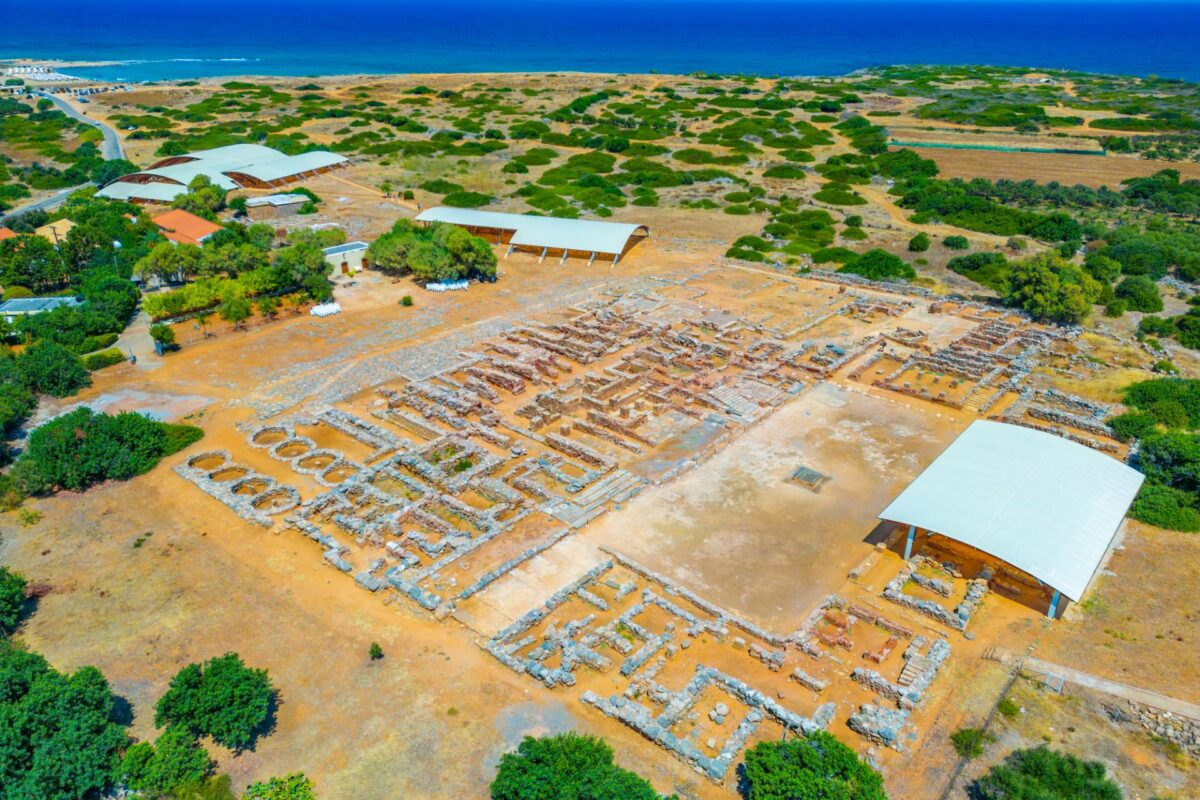
Only a few kilometers east of Malia’s town center lies the Palace of Malia, one of the most significant and evocative Minoan sites on the island. Originally constructed around 1900 BC and later rebuilt after an earthquake, this palace was once a vibrant political and economic hub.
As the third-largest Minoan palace after Knossos and Phaistos, Malia impresses with its sprawling courtyards, intricate storerooms, ceremonial chambers, and a distinctive circular grain silo. Highlights include the Kernos Stone, believed to have had religious significance, and the remains of the royal apartments.
Interpretive signage is available throughout the site, but a guided tour or audio guide is strongly recommended for deeper insight into the Minoan way of life, religious practices, and advanced architectural techniques.
Tip: Visit in the early morning or late afternoon to avoid the midday heat and experience the ruins bathed in golden Cretan light.
2. Gortyna: Crete’s Roman Capital
Approximately an hour’s drive southwest of Malia, Gortyna (or Gortyn) is a vast and fascinating archaeological site that once served as the Roman capital of Crete and Cyrenaica.
Here, history stretches across epochs: Greek, Roman, and Byzantine ruins coexist within the olive-dotted landscape. The standout feature is the Law Code of Gortyn, Europe’s oldest known legal inscription, etched in boustrophedon (alternating direction) across a massive stone wall. Dating back to the 5th century BC, it offers incredible insight into ancient Cretan society and justice.
Other must-see landmarks include:
- The ruins of the Roman Odeon (a small amphitheater),
- The remains of the early Christian basilica of St. Titus, Crete’s first bishop,
- And a series of Roman-era homes and baths that once bustled with life.
Practical note: The site is expansive, often quiet, and mostly unshaded. Bring water, wear a hat and sturdy footwear, and allow at least two hours to explore fully
3. Monastery of Kera Kardiotissa: A Spiritual Sanctuary
For a change of pace—and a touch of serenity—drive inland through the Lasithi Plateau to the Monastery of Panagia Kera Kardiotissa. Nestled in a pine-covered hillside, this 13th-century monastery is revered for its Byzantine frescoes, many of which remain remarkably well-preserved.
Dedicated to the Virgin Mary, Kera Kardiotissa is both a place of pilgrimage and a testament to Crete’s enduring religious traditions. Inside the small church, you’ll find exquisite depictions of saints, scenes from the New Testament, and intricate decorative motifs that reflect both Venetian and Cretan influences.
The monastery grounds, adorned with fragrant herbs and olive trees, offer a peaceful escape from the more touristic areas of the island.
Insider tip: Modest attire is appreciated (shoulders and knees covered), and photography inside the chapel is usually not allowed—so take a moment to simply absorb the atmosphere.
Final Thoughts: A Journey Through Time
The archaeological wonders near Malia reveal a Crete that’s far more than sun and sea. Each site, whether grand palace, sprawling ruin, or quiet monastery offers a distinct chapter in the island’s story. Together, they create a vivid mosaic of a land shaped by mythology, conquest, resilience, and faith.
For travelers who crave authenticity, cultural depth, and the thrill of walking in the footsteps of ancient civilizations, these sites are not just stops on an itinerary, they are the very soul of Crete.


Related Article